 Lynden Siding
 Why Ferndale's Climate Is Hard on Siding
Ferndale sits close enough to Bellingham Bay and the Strait of Georgia that salt-laden air is a daily fact of life, not an occasional weather event. Add Whatcom County's long wet season, driving rain that comes in sideways off the water, and a moss and algae season that can run eight or nine months out of the year, and you have one of the tougher environments in the Pacific Northwest for exterior siding. Materials that perform fine in a dry inland climate often struggle here. Salt air accelerates corrosion on fasteners and trim, constant moisture feeds mold and moss growth on anything with texture or grain, and wind-driven rain finds every gap in flashing and caulking that a calmer climate would never expose.
This is the environment we install in every day, and it shapes every decision we make about material, detailing, and sequencing on a Ferndale job — not just what siding looks like when it goes up, but how it will hold up in year eight, year fifteen, and beyond.
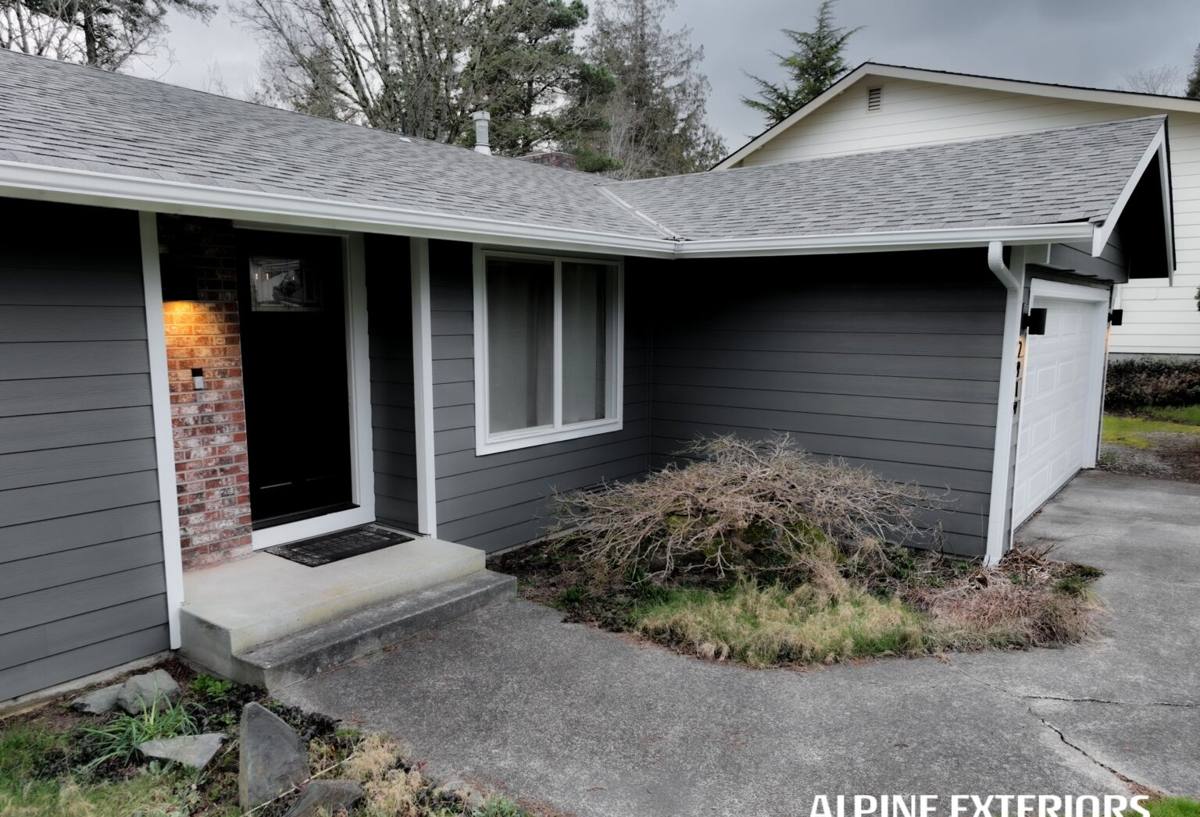
Why We Only Install James Hardie Fiber Cement
We do not install vinyl, LP SmartSide, Cemplank, Allura, or primed wood siding. That is a deliberate standard, not a sales pitch. In a coastal, high-moisture climate like Ferndale's, the material matters as much as the installation. Vinyl expands and contracts with temperature swings and can crack in cold snaps; it also traps moisture behind it if not detailed carefully. Engineered wood products like LP SmartSide are wood-based and, however well treated, remain more vulnerable to sustained moisture exposure than a cement-based product. Primed wood and cedar require an ongoing repainting and sealing commitment that most homeowners underestimate until the siding is already showing rot.
James Hardie fiber cement is a cement, sand, and cellulose fiber composite — it does not feed mold or moss the way wood does, it will not rust, and it is non-combustible, which matters given the region's wildfire-smoke summers even this close to the water. Hardie also engineers specific product lines by climate zone, and our region falls into HardieZone HZ5, which accounts for exactly the freeze-thaw and moisture cycling that Whatcom County sees. That's the product we stand behind, and it's the only one we put our name on.
What Correct Installation Requires Here
Fiber cement siding is only as good as the installation underneath it, and in a salt-air, high-rain climate the margin for error is smaller than in drier regions. A handful of details separate a siding job that lasts decades from one that fails early:
Rainscreen Drainage Gap
A proper installation includes a drainage gap between the siding and the weather-resistive barrier, letting any moisture that gets behind the siding drain and dry out instead of sitting against the wall sheathing. In a climate with Ferndale's rain volume, skipping this step is one of the most common causes of hidden rot behind otherwise good-looking siding.
Flashing at Every Penetration
Windows, doors, hose bibs, light fixtures, and vents are all places where water intrudes if flashing is missing or installed incorrectly. Wind-driven rain off the bay doesn't just fall straight down — it gets pushed sideways and upward under trim, so every penetration needs flashing detailed for that reality, not just a standard straight-down rain pattern.
Corrosion-Resistant Fasteners
Salt air degrades standard fasteners over time, leading to rust streaking and eventually fastener failure. We use fasteners rated for the coastal exposure this area sees, not the minimum spec that would pass inspection inland.
Correct Fastening Pattern and Clearances
Hardie siding has manufacturer-specified nailing patterns, minimum clearances from grade, roof lines, and decks, and specific gapping at butt joints. These aren't cosmetic guidelines — they're what keeps water from wicking into the plank ends and causing swelling or delamination over time.
ColorPlus Factory Finish
Choosing Hardie's ColorPlus prefinished option bakes the color into a factory-applied finish that resists fading and chipping better than field-applied paint, and it comes backed by its own finish warranty. In a climate where UV exposure is less brutal than moisture exposure, the finish still has to survive repeated wet-dry cycling without peeling — which is exactly what ColorPlus is engineered for.
Material Comparison for a Coastal Whatcom County Home
| Factor | James Hardie Fiber Cement | Vinyl | Engineered Wood (LP SmartSide) | Cedar / Primed Wood |
|---|---|---|---|---|
| Moisture resistance | Cement-based, does not rot or feed mold | Won't rot itself, but traps moisture behind it if not vented properly | Wood-based core, vulnerable if moisture reaches cut edges | Absorbs moisture readily, needs consistent sealing |
| Salt air / corrosion | Unaffected by salt exposure | Unaffected, but fasteners and trim can still corrode | Unaffected directly, but finish and edges are exposure-sensitive | No direct corrosion issue, but finish fails faster near salt air |
| Moss and algae resistance | Smooth cement surface resists organic growth better than wood grain | Resists growth but can look chalky/dirty over time | Wood grain texture can hold moisture and organic growth | Prone to moss and algae, especially on north-facing walls |
| Fire resistance | Non-combustible | Combustible, can melt or warp near heat sources | Combustible, treated but still wood-based | Combustible |
| Maintenance | Occasional wash, no repainting with ColorPlus | Low, but limited repair options if cracked | Periodic caulking and touch-up paint | Regular sealing/repainting, ongoing rot checks |
| Expected lifespan when correctly installed | 30+ years | 20-30 years, shorter in extreme swings | 20-30 years with diligent maintenance | 15-25 years with consistent upkeep |
Our Process for a Ferndale Siding Replacement
- On-site assessment. We walk the exterior, check for hidden moisture damage around windows, decks, and grade-level siding, and assess the current wall assembly before quoting anything.
- Tear-off and sheathing inspection. Once old siding is off, we inspect the sheathing and weather barrier for rot or damage that needs to be addressed before new siding goes on — this step catches problems that are invisible from outside.
- Weather-resistive barrier and drainage gap. We install or repair the water-resistive barrier and set up the rainscreen drainage plane before any siding goes up.
- Flashing at every penetration. Windows, doors, and fixtures get flashed and sealed to shed wind-driven rain, not just vertical rainfall.
- Hardie plank or panel installation. Installed to manufacturer specifications for fastening, clearances, and joint gapping, using corrosion-resistant fasteners suited to a coastal environment.
- Trim, caulking, and final detailing. Corners, trim boards, and joints are sealed with products rated for long-term flexibility in a wet climate, not general-purpose caulk that hardens and cracks within a few seasons.
- Final walkthrough. We review the finished work with the homeowner and point out anything worth watching, like drainage paths near grade or vegetation that should be kept trimmed back from the siding.
Signs Your Current Siding Is Already Losing the Fight
- Persistent moss or dark streaking that comes back within weeks of cleaning, especially on north- or west-facing walls
- Soft or spongy spots when you press on the siding near the bottom courses or around windows
- Paint that's bubbling, peeling, or won't hold no matter how often it's redone
- Visible warping, cupping, or separation at seams and butt joints
- Rust streaks running down from fasteners or trim
- A musty smell or visible mold on interior walls that back up to exterior siding
- Siding that was installed without a drainage gap or proper flashing — common in older homes and some past re-sides
Living With Fiber Cement in a Moss-Prone Climate
Even the best siding material benefits from basic upkeep in a climate like this. Fiber cement doesn't feed moss and algae the way wood does, but spores can still settle on any exterior surface, and a shaded, damp side of a house in Ferndale will show some growth over time regardless of material. A yearly rinse with a garden hose or soft wash (not a high-pressure blast, which can damage caulking and joints) keeps growth from taking hold. Keeping gutters clear and vegetation trimmed back from the walls also does more for siding longevity here than almost anything else a homeowner can do, since standing water and shaded, damp foliage against siding is what accelerates moss growth and slow moisture intrusion.
What to Ask Before Hiring a Siding Contractor in Ferndale
- Do you install a rainscreen drainage gap, or does the siding go directly against the weather barrier?
- What fastener type do you use, and is it rated for coastal/salt-air exposure?
- How do you flash around windows, doors, and other penetrations?
- Is the manufacturer's installation manual followed for clearances, fastening pattern, and joint gapping?
- What does the warranty cover — the material, the finish, and the labor — and who backs each part?
- Have you worked on homes in this specific area before, and do you understand the local exposure conditions?
Why Local Experience in Ferndale Matters
A siding job that's correct on paper can still fail if it isn't adapted to the specific exposure of a given wall — which direction it faces, how close it sits to the water, how much shade and standing moisture it deals with. Crews who work Whatcom County's coastal properties regularly recognize these patterns immediately: which walls need extra attention to flashing, where moss tends to take hold first, and how wind-driven rain behaves differently here than a few miles inland. That familiarity shows up in the small decisions made on-site, not just the material list on the estimate.
If your siding is showing its age or you're planning ahead for a replacement, we're happy to take a look and give you a straightforward, no-pressure estimate — just fill out the form below.