 Lynden Siding
 Storm Damage Roof Repair, Built for Aldergrove, BC Conditions
Aldergrove sits close enough to the Lynden area that the two communities share almost identical weather patterns — the same Pacific storm systems, the same wind corridors funneling off the Fraser Valley, and the same damp, marine-influenced air. A roof repair crew that only works fifty miles inland doesn't see these storms the way we do. We're out in this weather constantly, which means we know what a wind-driven Pacific front actually does to shingles, flashing, and underlayment in this specific corner of Whatcom County and the border area around it, not just what a textbook says should happen.
This page covers one job — storm damage roof repair — for one area. If you've had a windstorm, a hard rain event, or a falling branch cause damage to a roof in or near Aldergrove, this is what you need to know before you call anyone.
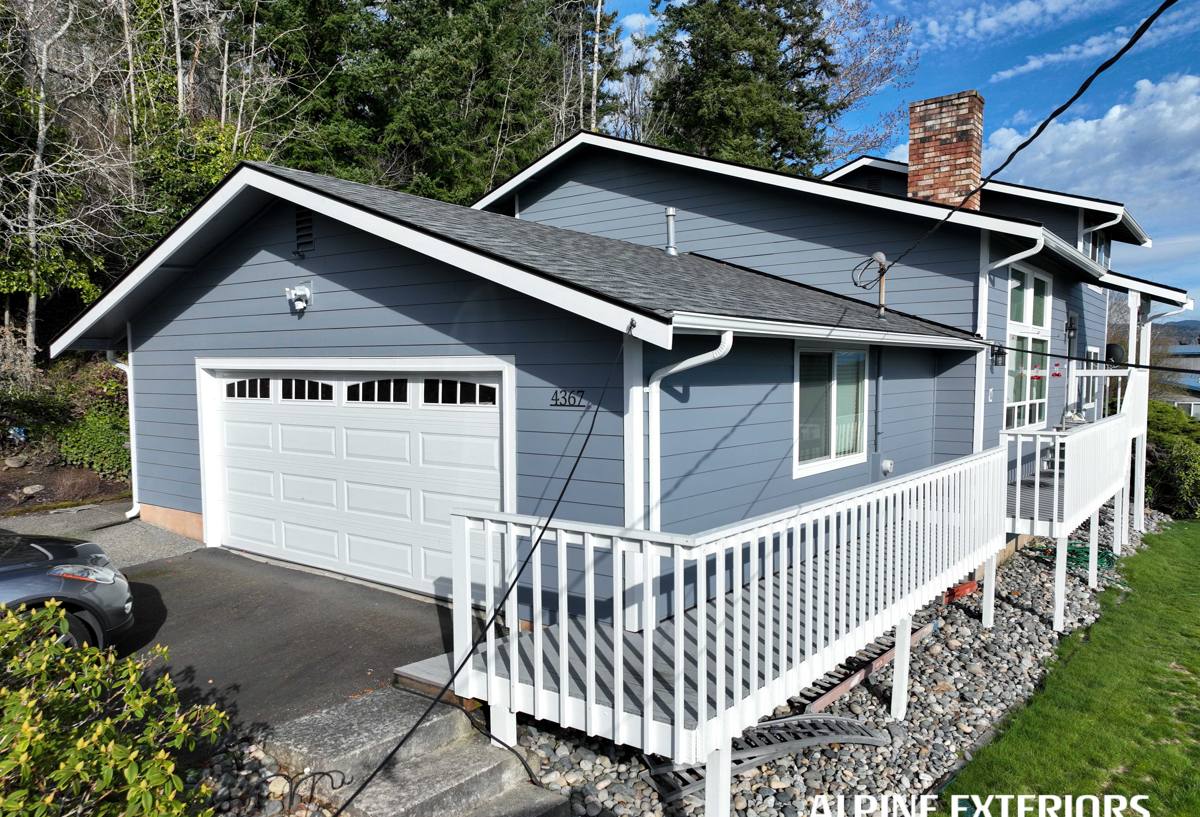
What Local Roofs Are Actually Up Against
Three things drive most of the storm damage we see in this region, and they compound each other over time.
Salt Air and Metal Fatigue
Proximity to the Salish Sea and Puget Sound means the air here carries more salt than most inland communities realize. Salt-laden moisture accelerates corrosion on exposed fasteners, flashing, and any unprotected metal roof components. A nail or flashing seam that would last decades in a dry inland climate can start showing rust streaks and weakened holding power years earlier here. When a storm hits a roof that's already got salt-weakened fasteners, damage tends to be worse than the wind alone would explain.
Driving Rain, Not Just Rainfall Totals
What matters for roof performance isn't just how much rain falls — it's the angle it falls at. Storms that come through with sustained wind push rain sideways and up under shingle tabs, around flashing laps, and into any gap that a calm-weather rain would never reach. This is why a roof that's "fine" in normal rain can still leak badly during a wind-driven storm event — the water is attacking joints and laps it doesn't normally see.
A Long Moss Season
Cool, damp conditions for much of the year give moss a long window to establish itself on north-facing slopes and shaded roof sections. Moss isn't just cosmetic. It holds moisture against the roofing material, lifts shingle edges as it grows, and gives wind something to grab onto during a storm — a shingle with moss roots working under its tab is far more likely to tear loose than a clean one. Storm damage and moss damage often show up together on the same roof for this reason.
Signs of Storm Damage Worth Checking For
Not all storm damage is obvious from the ground. Some of it only shows up as a slow leak weeks later. Here's what we look for, and what homeowners can reasonably check themselves without getting on a ladder:
- Missing or lifted shingles — visible gaps or shingle edges that no longer sit flat
- Granule buildup in gutters or at downspout outlets — a sign shingles are wearing or were impacted
- Bent, creased, or missing flashing around chimneys, vents, and roof-to-wall junctions
- Water stains on interior ceilings, especially near exterior walls or under roof valleys
- Debris on the roof — branches or larger debris can crack shingles or puncture underlayment even without leaving an obvious hole
- Sagging or uneven rooflines, which can indicate deck or structural damage beneath the roofing material
If you see any of these after a storm, the roof needs a real inspection — not just a patch on the spot you can see.
What a Correct Storm Damage Repair Actually Involves
A rushed storm repair is one of the most common ways a roof ends up with a second, bigger problem a year or two later. Doing it right means treating the repair as a diagnostic job first and a materials job second.
Full Inspection Before Any Patching
Storm damage rarely stays confined to the spot that's leaking. We check the full roof plane, not just the area over the stain on the ceiling, because wind-driven water travels sideways under shingles before it finds a way through the deck.
Deck Condition
If water has been getting under the roofing for any length of time, the plywood or OSB deck underneath may be softened or delaminating. Patching shingles over a compromised deck doesn't fix anything — it just hides the problem until the next storm.
Underlayment and Flashing, Not Just Shingles
Shingles get the attention because they're visible, but flashing and underlayment are what actually stop water. A proper repair replaces damaged flashing and re-establishes correct water-shedding laps, not just new shingles laid over old, compromised flashing.
Matching Materials Honestly
On an older roof, exact shingle matches aren't always available. We tell homeowners this upfront rather than let them find out after the fact — a close match on a repair section is normal and expected, not a sign of a bad job.
Repair vs. Replacement: How We Make the Call
| Factor | Leans Toward Repair | Leans Toward Replacement |
|---|---|---|
| Roof age | Under 12-15 years, otherwise healthy | Approaching or past expected material lifespan |
| Extent of damage | Isolated to one slope or section | Spread across multiple slopes or repeated storm hits |
| Deck condition | Solid, dry decking under damaged area | Soft spots, rot, or multiple layers of old roofing |
| Moss/algae history | Minor, treatable growth | Long-term moss damage across large areas |
| Material availability | Shingle line still in production | Discontinued material with no reasonable match |
We'll always walk you through where your roof falls on this table before recommending a direction — this is a judgment call based on what's actually happening on your roof, not a default upsell.
Insurance and Documentation
Most storm damage claims hinge on documentation taken close to the time of the event. When we inspect a storm-damaged roof, we photograph the specific damage, note the likely cause, and put it in writing in a way that's useful if you're filing a claim. We're not an insurance company and we don't promise claim outcomes, but a clear, honest inspection report is one of the most useful things a homeowner can hand their adjuster.
A few practical points worth knowing:
- Document damage as soon as it's safely possible after a storm — don't wait weeks
- Avoid unnecessary delay between damage and repair; some policies have timing requirements
- Keep receipts for any emergency tarping or temporary measures
- Get a written scope of repair, not just a verbal estimate, for insurance purposes
Our Process for Aldergrove-Area Storm Repairs
- Contact and scheduling — we get a description of the damage and prioritize active leaks
- On-site inspection — full roof assessment, not just the visibly damaged section
- Written scope and estimate — clear breakdown of what needs to happen and why
- Temporary protection if needed — tarping or emergency measures to stop active water intrusion
- Repair work — deck, underlayment, flashing, and roofing addressed in that order
- Final walkthrough — we show you what was done and why, in plain terms
Because Aldergrove sits near the border, scheduling and logistics sometimes take a little extra coordination compared to a job entirely on one side of the line. We handle that as a normal part of planning the job — it's not something that should add stress on your end.
Why a Crew That Already Works This Area Matters
A contractor unfamiliar with this specific stretch of Whatcom County and the adjacent BC communities is starting from zero on every storm call — figuring out local wind patterns, moisture behavior, and moss pressure from scratch on your roof. We're not guessing. We've seen how salt air ages fasteners here, how driving rain finds its way under laps that would hold fine in a calmer climate, and how moss quietly sets up damage that a storm then finishes off. That local pattern recognition is what separates a repair that actually holds from one that's patched today and leaking again next winter.
Get a Straight Answer on Your Storm Damage
If your roof took a hit in a recent storm — or you're not sure whether what you're seeing is storm damage or just wear — we're glad to take a look and give you an honest read on it. No pressure, no upsell script. Reach out below for a free estimate and we'll walk you through exactly what we find and what it would take to fix it right.