 Lynden Siding
 Building a Deck That Actually Holds Up in Deming
Deming sits in the Nooksack River valley, tucked against forested hillsides east of Lynden, and that setting shapes what a deck needs to survive here. Heavy tree cover means more shade and slower drying after rain. The valley holds moisture longer than open ground, and a long stretch of the year brings driving rain off and on for weeks at a time. Add in Whatcom County's broader marine-influenced climate — damp air, mild but wet winters, and a moss season that can run from fall through spring — and you get conditions that are hard on any outdoor structure that wasn't built with them in mind.
A deck built the way it might be built in a drier inland climate will show problems in Deming within a few years: soft spots at the ledger board, moss creeping across boards that never fully dry, fasteners bleeding rust, and railings that start to wobble because a post base held water instead of shedding it. None of that is inevitable. It's a function of design and material choices made (or not made) before the first board went down.
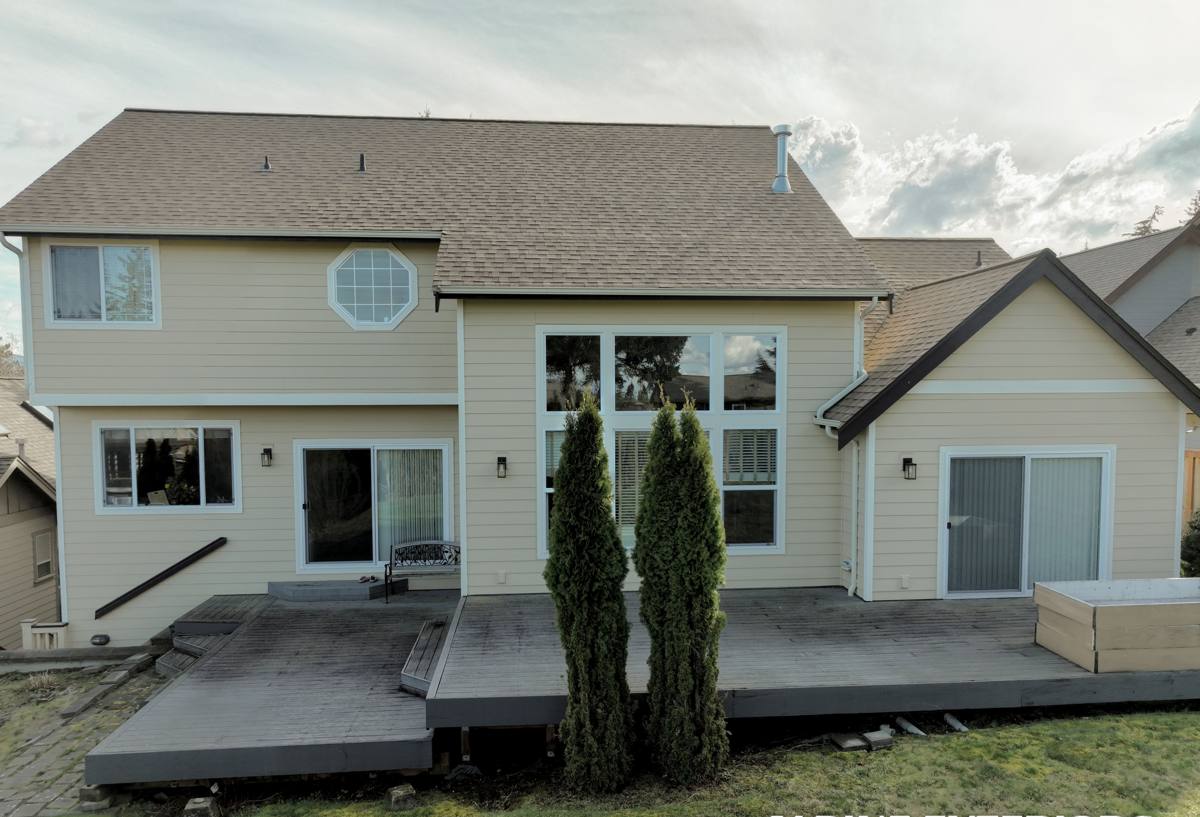
What Deming's Climate Actually Does to a Deck
Moisture That Doesn't Leave
Shade from surrounding trees and the valley's own humidity mean a deck surface in Deming can stay damp long after a storm has passed elsewhere in the county. That extended dampness is exactly what wood-rot fungi and moss need. Framing lumber that isn't properly rated or protected, ledger connections that aren't flashed correctly, and joist tops without a drainage gap all become entry points for slow, hidden decay.
Moss and Algae Growth
Moss doesn't just look bad — it holds water against the decking surface, and on smooth or low-traction boards it turns into a genuine slip hazard on stairs and landings. Once moss gets established in the grain of a board or in fastener heads, it's a recurring maintenance job, not a one-time cleanup.
Driving Rain and Wind-Driven Water
Rain in this part of Whatcom County doesn't always fall straight down. Wind-driven rain gets pushed sideways into ledger connections, under railing posts, and into any gap in flashing or fastening. Over time, that's how water finds its way behind the ledger board and into a house's rim joist — one of the most common and most expensive deck failures we see.
What a Correctly Built Deck Looks Like Here
None of this requires exotic materials or a dramatically different design — it requires getting the details right that get skipped when a crew is unfamiliar with this climate or in a hurry.
- Ledger board properly flashed and sealed where it attaches to the house, with a capillary break so water can't wick behind it
- Joist tops protected with a self-adhering flashing tape, not left as bare cut lumber that soaks up standing water
- Footings set below frost depth and sized for Whatcom County soil and load requirements, not guessed at
- Post bases that hold the post above the decking surface, off standing water, rather than notched into the deck itself
- Fasteners and hardware rated for treated lumber's chemical makeup, to prevent the corrosion that comes from mismatched metals
- Decking with enough gap and airflow underneath to actually dry out between rain events, not just after it stops raining
- Stair and landing surfaces chosen or treated for slip resistance, since those are the first spots moss takes hold
Decking Material Choices for a Shaded, Damp Lot
There's no single "best" decking material — there's a best fit for the specific deck, its sun exposure, and the owner's tolerance for maintenance. In a shaded, moisture-holding setting like much of Deming, the trade-offs matter more than they would on an open, sunny lot.
| Material | How It Handles Deming's Conditions | Maintenance Reality |
|---|---|---|
| Pressure-treated lumber | Rot-resistant when installed with proper drainage and airflow; can hold moisture longer in deep shade | Needs periodic sealing/staining to perform long-term; lowest upfront cost |
| Cedar | Naturally moisture- and insect-resistant; ages gracefully but still needs airflow to avoid trapping dampness | Regular sealing recommended to hold color and resist moss; moderate cost |
| Composite decking | Doesn't absorb water like wood, which helps in shaded areas, but can still grow surface moss/algae if never cleaned | No staining or sealing; occasional cleaning to keep moss from taking hold on the surface |
| PVC decking | Fully moisture-resistant material; best option where shade and dampness are the biggest concerns | Lowest ongoing maintenance; higher upfront material cost |
We'll walk through these trade-offs honestly for your specific lot — how much sun it actually gets, how the yard drains, and what kind of upkeep you're realistically willing to do. A composite or PVC deck under heavy tree cover behaves differently than the same material in full sun, and it's worth knowing that before you commit.
Framing and Footings: Where Deming Decks Actually Fail
Most deck problems we get called out to inspect aren't decking-surface problems — they're framing and connection problems that took a few years to show themselves. In river-valley soil that holds moisture, footing depth and drainage around the footing matter more than they would in well-drained ground. We size and place footings to local frost and load requirements, not a generic minimum, and we check that water has somewhere to go once it hits grade near the deck instead of pooling against posts or the house foundation.
Ledger attachment is the other place we spend real time. It's the single connection point where a deck attaches to your home, and it's also the most common source of water intrusion when it's flashed poorly or not flashed at all. We treat that connection as the most important part of the build, not a step to move through quickly.
Our Process for a Deming Deck Build
1. On-Site Assessment
We walk the site, look at sun exposure, tree cover, drainage patterns, and how the deck will tie into the house. Shaded, damp lots get evaluated differently than open ones — the framing and material recommendations follow from what we actually see on your property.
2. Design and Material Selection
We talk through decking material, railing style, and layout with your budget, maintenance preference, and the site's conditions in mind — not a one-size answer.
3. Permitting
Deck projects in Whatcom County typically require a permit depending on size and height. We handle that process rather than leaving it for you to sort out.
4. Footings and Framing
Footings set to depth, ledger flashed and sealed, joists protected and spaced for drainage and airflow — this is the stage that determines whether the deck lasts 10 years or 30.
5. Decking, Railing, and Finish Work
Surface installed with proper gapping, railings set plumb and secure, stairs finished with attention to slip resistance on the treads and landings.
6. Final Walkthrough
We go over the finished deck with you, including what maintenance (if any) the material you chose will need going forward.
Why a Crew That Already Works This Area Matters
A contractor who mainly builds in drier, sunnier parts of the state can turn out a deck that looks fine on day one and still fails early in a shaded Nooksack valley setting. Getting flashing details, footing depth, drainage, and material selection right for Deming's specific mix of tree cover, humidity, and driving rain isn't something you can shortcut with a generic build. It comes from having actually built and repaired decks in Whatcom County conditions and seen where the generic approach falls short.
We're a Lynden-based crew that works Deming and the surrounding valley regularly. That means we're not guessing at how a given lot drains or how much shade a north-facing deck will hold onto through the winter — we've seen it on other jobs nearby.
Maintaining a Deck Through Whatcom County's Wet Season
Even a well-built deck benefits from a little seasonal attention, especially heading into the wetter months:
- Sweep debris and needles off the surface regularly so moisture doesn't get trapped underneath leaves
- Clear leaves and debris out of gaps between boards so water and airflow can move through
- Check and clean any moss starting to form on stairs and shaded corners before it spreads
- Inspect railing posts and stair stringers annually for movement or soft wood
- Reseal or restain wood decking on the manufacturer's recommended schedule, not just when it looks faded
- Keep gutters and downspouts near the deck clear so runoff isn't draining directly onto or under it
None of this is complicated, but skipping it is how a well-built deck starts showing the kind of problems a poorly built one shows in half the time.
Get a Straightforward Estimate
If you're planning a new deck or replacing one that's showing its age in Deming, we're happy to come take a look, walk the site with you, and give you an honest picture of what it'll take — no pressure, no upsell. Use the form below to request a free estimate.