 Lynden Siding
 Why Kendall Homes Need a Different Approach to Windows
Kendall sits back from town, closer to the foothills, where the tree cover is heavier and the weather sits on a property longer than it does out on the open farmland around Lynden proper. That matters more for windows than most homeowners realize. A window isn't just glass and a frame — it's a seal system that has to hold up against constant moisture cycling, wind-driven rain that doesn't just fall but pushes sideways into the wall, and long stretches of shade that keep humidity around the house instead of letting it evaporate off in the afternoon sun.
Add in the broader Whatcom County climate — salt-laden air moving in off the Sound, driving rain through the fall and winter, and a moss season that can run eight months out of the year on north-facing walls — and you get a set of conditions that will find every weak point in a window installation. Old aluminum-frame windows from the 1980s and 90s, or vinyl windows installed without proper flashing, are usually the first thing to show it: fogged glass, soft trim, drafts you can feel with your hand, and heating bills that don't add up to how new the house looks.
This page is specifically about replacing those windows the right way for a Kendall property — not a generic rundown of window brands. We'll cover what actually fails out here, what a correct installation looks like, and what to expect from the process.
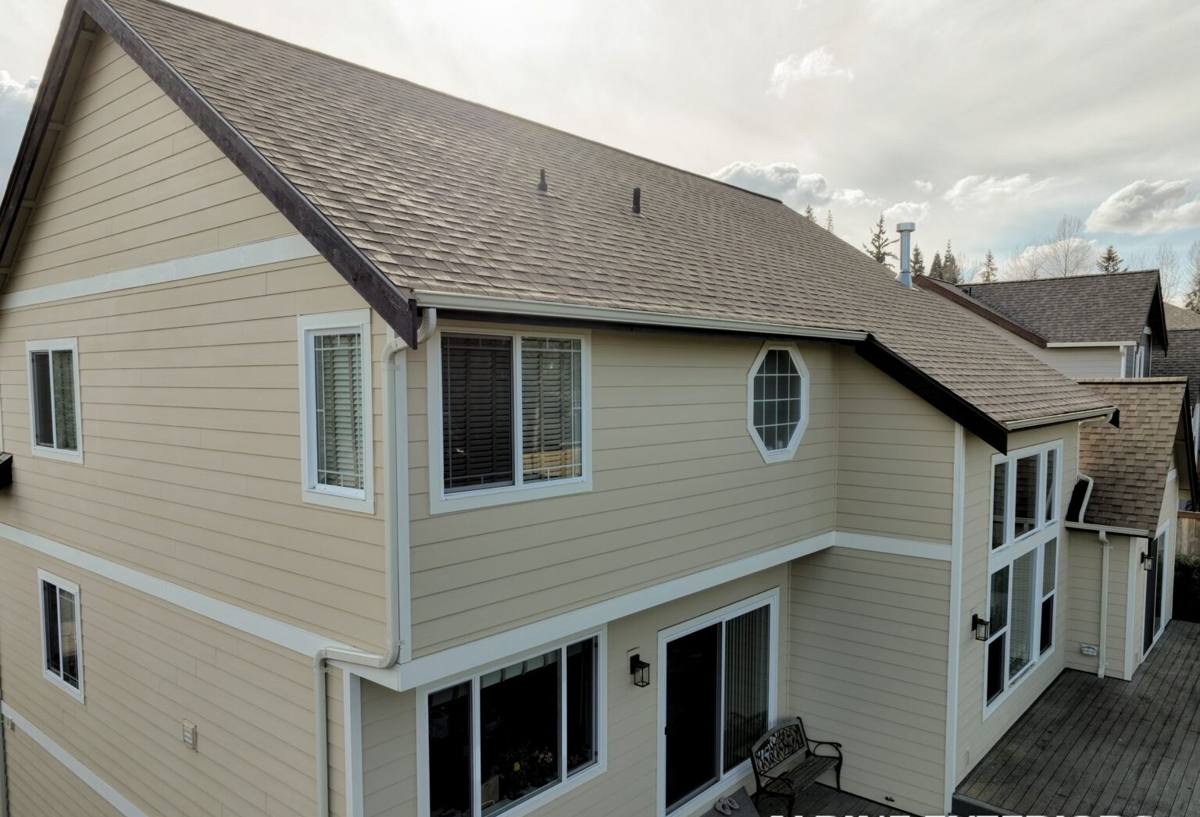
What the Local Climate Actually Does to a Window
Moisture Cycling
Kendall's tree-shaded lots and the general dampness of the Nooksack valley mean walls stay wet longer after a storm than they would on an open, sun-exposed lot. Wood framing around a window opening that never fully dries out will eventually rot, and once that happens no amount of caulking on the outside will fix it — the problem is inside the wall.
Wind-Driven Rain
Rain that comes in sideways during a winter storm doesn't respect a window that was only sealed on the face. It gets pushed up under trim and behind flanges that weren't properly integrated with the house wrap. This is one of the most common failure points we find on older replacement jobs — the window itself was fine, but the flashing detail around it was never done to shed water correctly.
Moss and Organic Growth
Moss doesn't just grow on roofs. On shaded window sills, in corner joints, and along trim that stays damp, it holds moisture against the wood and finish far longer than it should. Over a few seasons that turns into soft wood, failed paint, and eventually a frame that needs replacing well before its time.
Salt Air and Metal Fatigue
Whatcom County's proximity to the water means airborne salt reaches even inland properties. It's a slower process here than right on the coast, but it still accelerates corrosion on hardware, hinges, and older aluminum frames over the years. It's one more reason we favor materials and hardware rated for coastal exposure rather than standard inland-grade parts.
Signs a Kendall Home Needs Window Replacement, Not Just Repair
- Fogging or a visible haze between the panes of a double-pane window — the seal has failed and the gas fill is gone
- Soft or spongy wood at the sill or the bottom corners of the frame
- Visible daylight or a draft you can feel around the edge of a closed window
- Paint that keeps failing on the same window trim no matter how often it's repainted
- Windows that are difficult to open, close, or lock — frames have swollen or warped
- A noticeably colder room in winter compared to the rest of the house
- Moss or black staining building up on the sill or lower trim year after year
If you're only seeing one or two of these and the frame itself is sound, a repair or reseal might be enough. Once you're seeing several together, or there's any wood rot in the opening, replacement is almost always the more honest recommendation — patching a rotted sill just delays a bigger repair.
What Correct Installation Looks Like
The window unit itself matters, but in this climate the installation detail matters just as much, if not more. A quality window installed with sloppy flashing will leak. A modest window installed correctly will outperform it.
Our process on a typical replacement:
- Assess the opening. Before anything is ordered, we check the existing framing for rot, check the sill pitch, and confirm the rough opening is sound. Any soft wood gets addressed before a new window goes in — never covered over.
- Correct flashing sequence. Water gets shed in layers: sill pan flashing first, then the window, then side and head flashing integrated with the house wrap in the right order — bottom to top, so water always moves down and out, never behind the next layer.
- Air seal, not just caulk. A bead of exterior caulk is the last line of defense, not the whole plan. The real seal happens between the window frame and the rough opening with proper insulation and an air barrier, so you're not depending on caulk alone to keep weather out.
- Set and shim level. A window that's out of square will bind, won't seal evenly, and will wear unevenly over the years. We shim and check it in both directions before fastening.
- Interior and exterior trim. Trim gets back-primed and sealed on all sides before install, not just painted after — that's one of the more common shortcuts that leads to trim failure a few years down the line.
Choosing the Right Window for This Climate
There's no single "best" window — the right choice depends on the home's exposure, budget, and how much upkeep you want to take on. Here's how the common options stack up for a shaded, damp, foothill-adjacent property like the ones around Kendall.
| Frame Material | How It Handles This Climate | Maintenance |
|---|---|---|
| Vinyl | Good moisture resistance, won't rot; performance depends heavily on install quality | Low — occasional cleaning |
| Fiberglass | Very stable in temperature swings, holds up well to sustained damp and shade | Low |
| Wood (clad exterior) | Warm interior look; exterior cladding protects the wood, but any breach in the cladding invites rot | Moderate — watch cladding seams |
| Aluminum | Prone to condensation and thermal transfer in our winters; older units are common failure points here | Moderate to high |
We generally steer Kendall-area homeowners toward vinyl or fiberglass for most applications — not because other materials are bad products, but because they hold up with the least ongoing attention in a climate that stays damp and shaded for so much of the year. Clad wood is a fine choice for homeowners who want that look and are willing to keep an eye on the cladding seams over time.
Glass Package Matters Too
Beyond the frame, the glass package is where a lot of the actual energy performance comes from. For this area we typically recommend double-pane units with a low-E coating and argon gas fill as the baseline — it cuts heat loss in winter and reduces solar gain in the rare stretches of strong summer sun, without the added cost of triple-pane, which usually isn't necessary at Whatcom County's elevation and climate profile.
Cost Factors Worth Understanding
We don't quote pricing without seeing the house, but the factors that move the number are consistent from job to job:
| Factor | Why It Affects Cost |
|---|---|
| Frame material | Vinyl is typically the most budget-friendly; fiberglass and clad wood cost more upfront |
| Number of openings | Per-window cost drops somewhat with larger jobs due to shared setup and disposal |
| Existing rot or framing damage | Any wood repair needed at the opening adds labor beyond a straight swap-out |
| Window size and configuration | Large picture windows, bays, and custom shapes cost more than standard single/double-hung sizes |
| Trim and finish work | Matching existing interior trim or upgrading exterior trim adds to the scope |
Generally, homeowners in this area budget somewhere in the range of a few hundred to over a thousand dollars per window installed, depending on the factors above — a full home replacement obviously scales from there. We'll always give you an itemized number after seeing the actual openings, not a rough estimate over the phone.
Why Hiring a Crew That Knows Kendall Matters
A general contractor from outside the area can install a window that looks right and still fails in two winters, because they didn't account for how much longer a shaded, damp lot stays wet after a storm, or how aggressive the moss growth is on north-facing trim out here. We work this area regularly, which means we already know what to check for before a problem shows up — soft sills hiding under old caulk, flashing that was never integrated with the house wrap, hardware that's already showing early corrosion from years of salt-tinged air.
It also means we're realistic with you. If a window doesn't need full replacement yet, we'll say so. If the frame is sound but the seal has failed, we'll tell you that repair is the honest answer, not an upsell to a full job you don't need yet.
What to Expect During the Project
- An on-site assessment of each window opening, including a check for hidden rot or moisture damage
- A written, itemized quote broken down by window, not a single lump sum
- A clear installation timeline, including weather contingencies — we don't rush flashing work into a rain window
- Careful removal of old windows to avoid unnecessary damage to interior or exterior finishes
- Full flashing and air-sealing detail on every unit, not just the visible caulk line
- A final walkthrough where every window is opened, closed, and checked before we consider the job done
Maintaining New Windows in a Damp, Shaded Climate
Even a correctly installed window benefits from a little seasonal attention out here. Clear debris and moss buildup from sills and tracks before it has a chance to hold moisture against the frame. Check exterior caulk lines once a year, particularly after a hard winter, and touch up any cracking before water gets behind it. Keep gutters clear above window openings — overflow during a heavy Whatcom County rain event is a common way water ends up somewhere it shouldn't be. None of this is difficult, but it's the difference between a window system that lasts decades and one that starts showing problems in year five.
If you're noticing drafts, fogged glass, or soft trim on a Kendall-area home, we're glad to come take a look. We offer a free, no-pressure estimate — no obligation, just a straight assessment of what your windows actually need. Use the form below to get started.