 Lynden Siding
 Windows Built for How Kendall Actually Weathers
Kendall sits in a part of Whatcom County where the weather doesn't do anything in half measures. Rain moves through in long, low-pressure stretches rather than quick storms, the tree cover and river-bottom humidity keep moisture sitting against the house longer than it would in a drier climate, and moss finds a foothold on almost any surface that stays damp for more than a few weeks. Windows take the brunt of this. They're the part of the exterior with the most seams, the most moving parts, and the most opportunities for water to find a way in if the installation wasn't done right the first time.
A window that's a perfectly good product on paper can still fail early if it's set into a rough opening that wasn't properly flashed, sealed, and drained. In this climate, installation quality matters at least as much as the window brand itself. That's the piece we focus on.
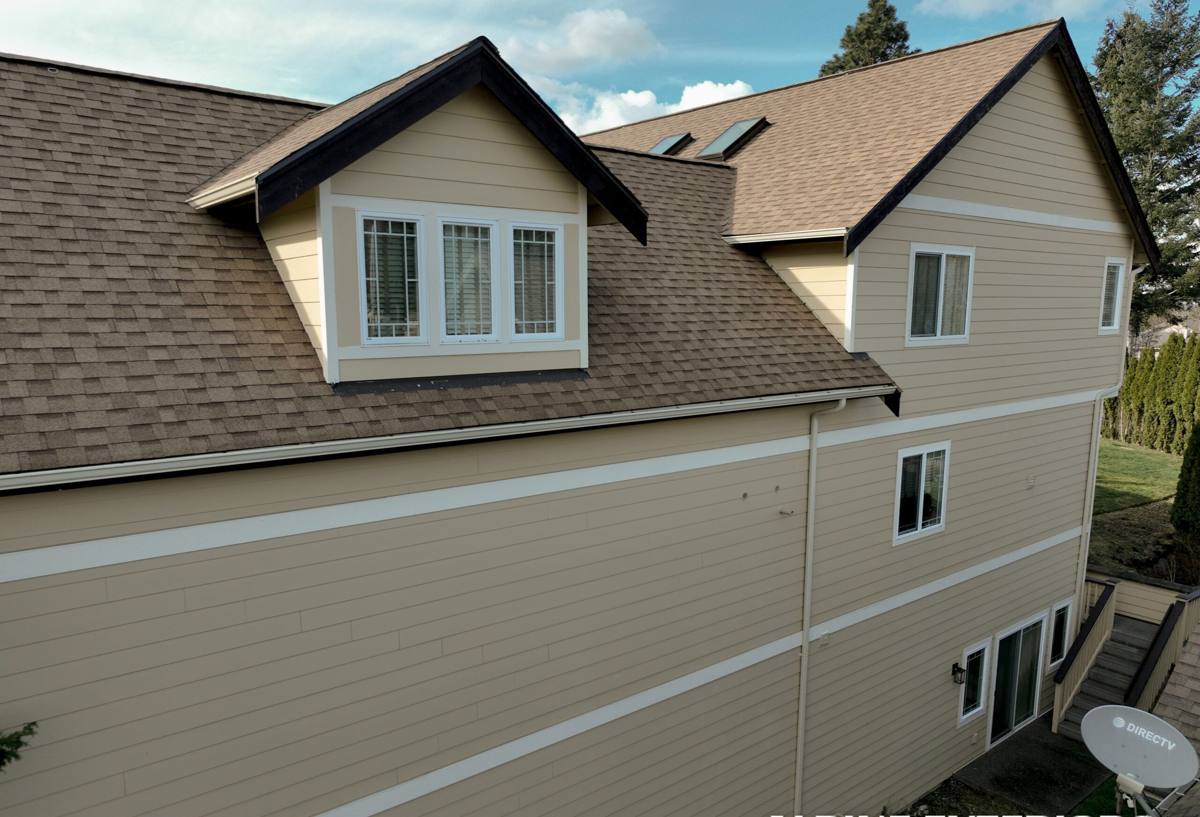
Signs a Kendall Home's Windows Need Attention
Most window problems out here don't show up as a dramatic leak. They show up gradually, as soft spots, drafts, and discoloration that homeowners get used to before they realize how far along the damage is. Worth checking for:
- Fogging or a hazy film between panes of a double-pane window — the seal has failed and the gas fill is gone
- Soft, spongy, or darkened wood at the sill or bottom corners of the frame
- A draft you can feel with your hand near the frame edge on a windy day
- Windows that are hard to open, close, or lock, especially older wood or aluminum units that have swollen or warped
- Moss, algae, or black streaking building up on the sill or the siding just below the window
- Paint or caulk that's cracked and pulling away from the frame
- Higher heating bills without any other obvious explanation
Any one of these on its own isn't necessarily an emergency. Several of them together, especially on the same window, usually mean the unit or its installation has reached the end of its useful life.
What a Correct Window Installation Actually Involves
It's Not Just Setting a Window in a Hole
A window replacement that's done right is really a small waterproofing project with a window in the middle of it. The steps that matter most in a wet climate like this one:
- Removing the old unit without tearing up more of the surrounding wall than necessary
- Inspecting the rough opening and framing for rot, soft sheathing, or old water damage before anything new goes in
- Installing a sloped sill pan so any water that does get past the window has somewhere to drain, instead of sitting on the framing
- Flashing the opening in the correct shingle-lap order — house wrap, sill pan, side flashing, then head flashing — so water is always directed outward and down, never trapped behind a layer
- Setting the window plumb, level, and square, then securing it per the manufacturer's fastening schedule
- Insulating the gap around the frame without overpacking it, which can bow the frame and cause operational problems
- Sealing the interior and exterior with the right sealant for the surface, not just whatever caulk is on hand
Skip or rush any one of these steps and the window itself becomes almost irrelevant — water will find the gap in the process, not the product.
Framing Repairs Are Common, Not Rare
On older Kendall homes, it's common to open up a window opening and find some degree of rot or moisture damage in the framing that wasn't visible from outside. We treat this as an expected possibility, not an upsell — if we find it, we'll show you what we're seeing, explain what needs to be replaced, and give you a clear cost before proceeding. Covering up soft framing behind a new window just guarantees a repeat problem in a few years.
Choosing a Window for This Climate
There isn't one "correct" window for every home, but some materials handle sustained damp exposure and moss-prone shade better than others. Here's how the common options generally compare for a property like a Kendall home with tree cover and consistent rain exposure:
| Frame Material | Moisture & Rot Resistance | Maintenance | Typical Cost Range |
|---|---|---|---|
| Vinyl | Very good — won't rot, doesn't require paint | Low — occasional cleaning | Lower |
| Fiberglass | Excellent — very stable in wet, temperature-swinging conditions | Low | Mid to upper |
| Wood / Wood-Clad | Good on the clad exterior; interior wood needs protection from moisture | Higher — periodic finishing and sealing | Upper |
| Aluminum | Fair — durable but conducts cold and can condensate more in damp climates | Low | Mid |
We're generally cautious about recommending unclad wood exteriors for homes with heavy shade or tree cover, since the interior finish requires more upkeep than most homeowners want to keep up with in a climate that stays damp for months at a stretch. That's a maintenance conversation, not a knock on wood as a material — it's a great look, it just asks more of the owner here than a clad or vinyl option does.
How Our Process Works
Assessment and Estimate
We start with a walk-through of the windows you're concerned about, checking framing condition, drainage, and how the current units were installed. You get a straightforward estimate with the material options laid out, not a single take-it-or-leave-it number.
Install Day
We protect your interior and landscaping before removal starts, work one window opening at a time so the house isn't left exposed, and inspect each opening as we go rather than assuming every opening is identical. Any framing issue gets flagged and priced before we move forward, not discovered after the fact.
Finish and Walkthrough
Once a window is set, flashed, insulated, and sealed, we clean up the work area and walk through the finished opening with you — operation, locks, and how the exterior trim was finished.
Full-Frame Replacement vs. Insert Replacement
There are two general approaches to replacing an existing window, and which one fits depends on the condition of your current frame:
- Insert (pocket) replacement — a new window is fitted inside the existing frame, which stays in place. Faster and less invasive, but only appropriate when the existing frame is still solid, square, and dry.
- Full-frame replacement — the old frame is removed down to the rough opening, exposing the framing and allowing new flashing and a sill pan to be installed from scratch. More work, but it's the only option when there's any rot, water damage, or the frame is out of square.
Given how often moisture works its way into older window openings in this area, we don't assume an insert replacement is the right call until we've actually looked at the condition of the existing frame. Recommending the cheaper option on a frame that's already compromised just sets the homeowner up for the same repair again in a few years.
Why Local Installation Experience Matters in Kendall
Kendall's mix of open farmland and heavily wooded, shaded lots means moisture exposure varies a lot from one property to the next, even a short distance apart. A crew that regularly works Whatcom County homes has a feel for which openings are likely to have hidden rot, how much shade and airflow a given lot gets, and where moss and algae tend to build up first. That local pattern-recognition shows up in fewer surprises during the job and a better match between the window you choose and how your specific property actually sits.
It also means a real, accountable local presence if a warranty question or adjustment ever comes up down the road — not a phone number for a call center in another state.
After Installation: Keeping Windows Performing
New windows still need a little seasonal attention in this climate:
- Rinse sills and tracks periodically to keep moss and algae from establishing, especially on shaded, north-facing windows
- Check exterior caulk lines once a year for cracking or separation
- Keep gutters and downspouts clear so roof runoff isn't sheeting directly down over window heads
- Trim back vegetation that's shading a window enough to keep it damp most of the day
None of this is heavy maintenance — it's the kind of once-or-twice-a-year check that keeps a properly installed window performing for its full lifespan instead of fighting moss and moisture buildup from year one.
Get a Free Estimate
If you're dealing with drafty, foggy, or sticking windows on a Kendall property, or you're just planning ahead before the wet season sets in again, we're happy to take a look and walk you through your options honestly. Use the form below to request a free, no-pressure estimate.