 Lynden Siding
 Building a Deck That Actually Holds Up in Nooksack
Nooksack sits in a part of Whatcom County where the weather doesn't do a homeowner any favors. Marine air pushes up the river valleys off the Sound, atmospheric rivers dump long stretches of driving rain through fall and winter, and the shaded, moisture-heavy ground around a lot of Nooksack properties keeps decking damp far longer than it would in a drier climate. A deck built here isn't just a place to put a grill and some chairs — it's an outdoor structure that has to survive months of standing moisture, moss colonization, and repeated freeze-thaw cycles every year. We build custom decks specifically with that reality in mind, not with a generic build that happens to be installed in Nooksack.
This page covers what a deck actually needs to hold up out here, how we approach the build from the ground up, and what to expect if you're planning a new deck or replacing one that's showing its age.
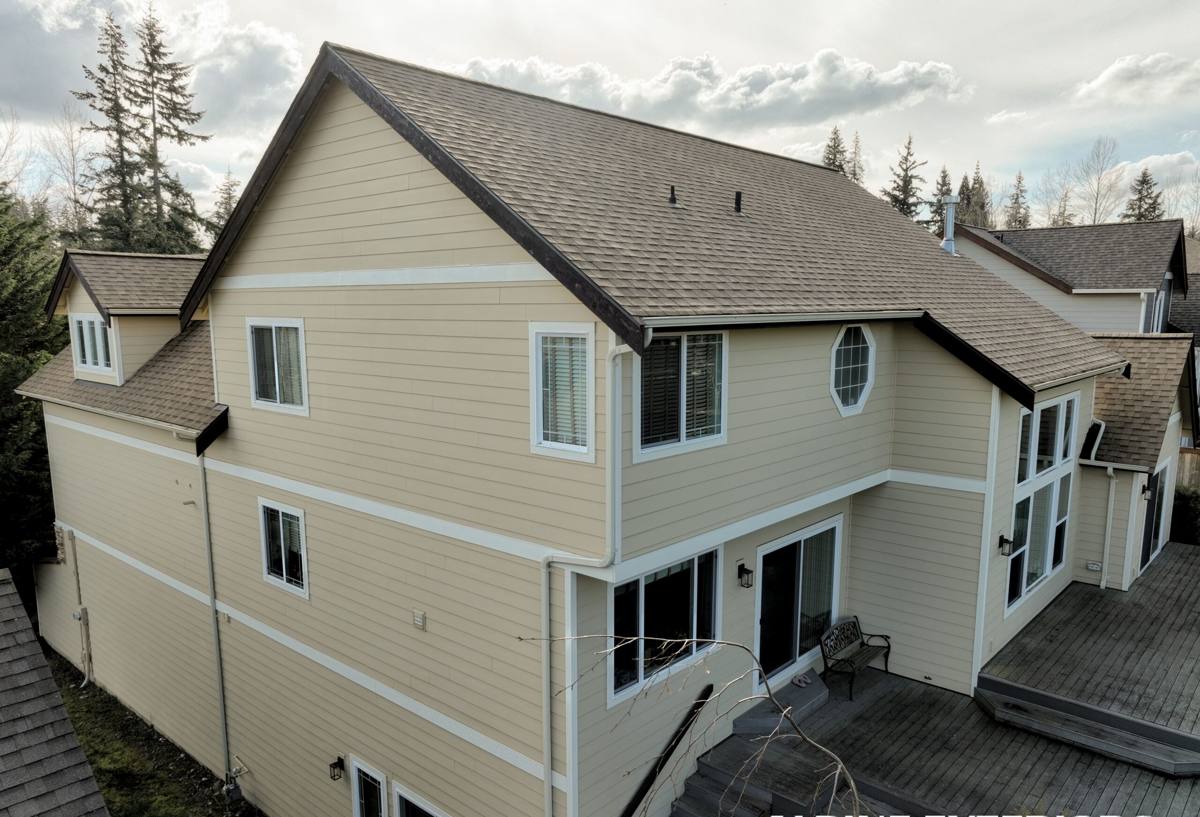
What Whatcom County Weather Does to a Deck
Most deck failures we get called out to inspect aren't dramatic. They're slow. Understanding the specific ways this climate works against a deck helps explain why certain shortcuts cost homeowners money later.
Moss and Algae Growth
Long, mild, wet winters combined with shade from mature trees and taller structures give moss and algae exactly what they need to establish on horizontal wood and composite surfaces. Beyond looking bad, moss holds moisture against the decking material, which accelerates rot in wood and can stain composite boards if it's left to spread unchecked.
Driving Rain and Standing Water
Rain here doesn't always fall straight down. Wind-driven rain gets pushed sideways into ledger connections, under rail posts, and into any gap where end grain is exposed. If flashing and drainage details are done poorly, water finds its way into the framing long before a homeowner notices anything wrong on the surface.
Freeze-Thaw Cycling
Whatcom County doesn't get extreme cold for long stretches, but it does see repeated freezing and thawing through the winter. Water that's absorbed into wood fibers or trapped in small cracks expands when it freezes, which widens checks and cracks a little more each cycle. Over several winters, that's how a deck board that looked fine two years ago starts splitting.
Decking Material Options Compared
There's no single "best" decking material — the right choice depends on budget, how much upkeep a homeowner wants to do, and how the deck is oriented relative to sun and shade. Here's how the common options stack up for a Nooksack property specifically.
| Material | Moisture Behavior | Maintenance | Typical Lifespan Here |
|---|---|---|---|
| Pressure-treated wood | Absorbs water readily; needs sealing to resist rot and checking | Annual cleaning, re-sealing every 1-2 years | 10-15 years with upkeep |
| Cedar | Naturally rot-resistant but still needs finish protection in shaded, damp spots | Periodic cleaning and re-staining | 15-20 years with upkeep |
| Composite decking | Doesn't absorb water like wood, but moss and algae can still grow on the surface film | Regular washing; no sealing or staining | 25+ years, varies by product warranty |
| PVC decking | Essentially non-absorbent; best resistance to moisture-driven damage | Occasional washing | 25+ years, varies by product warranty |
We don't push any single material as the "right" answer for every project. Composite and PVC cost more up front but shift the maintenance burden away from sealing and staining, which matters if the deck sits in a shaded, damp part of the yard. Wood costs less initially but only performs as advertised if the homeowner keeps up with sealing on a real schedule — skip that for a couple of years in this climate and the wood starts absorbing moisture it can't shed.
Framing and Substructure: The Part Nobody Sees
The decking boards get all the attention, but the framing underneath is what actually determines how long a deck lasts. In a wet climate like this one, we pay close attention to details that don't show up in a quick walkthrough:
- Ledger board flashing that directs water away from the house rim joist, not into it
- Joist tape or a comparable barrier over the tops of joists to keep fasteners from sitting in a wet joint
- Proper spacing and slope so water sheets off the deck surface instead of pooling
- Post bases set above grade and clear of standing water, especially on lower or shaded lots
- Adequate ventilation underneath low-clearance decks so the substructure can actually dry out between rain events
A deck can look great for the first couple of seasons even if these details were skipped. The problems show up three, five, or eight years in — usually as soft spots near the house, rot at post bases, or a ledger connection that's been quietly taking on water the whole time.
Railings, Fasteners, and Hardware
Hardware choice matters more here than in a drier climate. We use fasteners and structural connectors rated for exterior, high-moisture exposure — not standard hardware that will start corroding within a season or two of constant dampness. Corroding fasteners aren't just an eyesore; a weakened connection at a railing post or joist hanger is a safety issue, not just a cosmetic one.
For railings, the same moisture logic applies to material choice. Wood rail systems need the same sealing discipline as wood decking. Metal or composite rail systems reduce that maintenance load but should still be checked for proper post anchoring, since that's a structural connection that has to hold up under both weather and everyday use.
How Our Deck-Building Process Works
Every custom deck project follows roughly the same sequence, though the specifics change based on the lot, the layout, and what the homeowner wants out of the space.
- On-site assessment. We look at drainage, sun/shade exposure, existing structure (if it's a replacement), and how the space will actually be used before recommending a layout or material.
- Design and material selection. We walk through the material comparison above in the context of the specific property — budget, maintenance tolerance, and how exposed the deck will be to shade and moisture.
- Permitting. Most new decks and many replacements in Whatcom County require a permit, especially anything attached to the house or built above a certain height. We handle that process rather than leaving it to the homeowner.
- Demolition (if applicable). For deck replacements, we remove the old structure and inspect the ledger connection and any framing that will be reused, flagging anything compromised before building on top of it.
- Framing and flashing. This is where the moisture-management details above get built in — ledger flashing, joist protection, proper drainage slope, and correctly rated hardware.
- Decking, railing, and finish work. Final surface installation, railings, stairs, and any trim or lighting the design calls for.
- Final walkthrough. We go over the finished deck with the homeowner, including what maintenance the chosen material actually needs going forward.
Permits and Code Considerations in Whatcom County
Deck permitting requirements vary based on height above grade, whether the structure attaches to the house, and total square footage. Skipping the permit process on a project that requires one can create real problems later — at resale, with insurance, or if an inspector flags an unpermitted structure. We factor permitting into the project timeline up front so it isn't a surprise partway through, and we handle the submission and inspection coordination as part of the build rather than treating it as the homeowner's separate task.
Maintenance Checklist for a Nooksack Deck
Whatever material a deck is built from, a little regular attention goes a long way in this climate. This is the baseline we recommend to homeowners after a build:
- Sweep debris off the deck surface regularly, especially fallen leaves and needles that trap moisture
- Wash the surface at least once a year to remove moss and algae before it establishes
- Check for standing water after heavy rain and confirm drainage is working as designed
- Inspect railing post connections annually for looseness or corrosion
- For wood decking, re-seal or re-stain on the schedule the product actually calls for — not "when it looks bad"
- Clear vegetation and debris from underneath low-clearance decks so airflow isn't blocked
- Look closely at the ledger connection where the deck meets the house once a year
Why Hire a Crew That Already Works in Nooksack
A deck built to a generic national spec sheet can still fail early in a climate it wasn't really designed for. The value in working with a crew that already builds in Nooksack and the surrounding Lynden area is that the flashing details, hardware choices, and drainage planning aren't an afterthought — they're built in from the first framing decision because we've seen what happens when they're skipped. We're familiar with local permitting expectations, the kind of lot drainage and shade patterns common in this area, and the maintenance realities homeowners here actually deal with season to season.
If you're planning a new custom deck or need to replace one that's past its prime, we're glad to take a look at your property and talk through what makes sense for your specific site. Reach out for a free, no-pressure estimate using the form below.