 Lynden Siding
 Siding Installation Built for the Nooksack Area
The Nooksack community sits in one of the wettest corners of Whatcom County, tucked into the river valley east of Lynden where marine air off the Sound pushes inland and stalls against the foothills. Homes here don't just get rained on — they sit in a long, damp shoulder season where siding stays wet for days at a time, and a moss season that can stretch from October well into spring. Any siding installed in this stretch of the valley has to handle that reality, not just look good on a dry install day.
We install siding for homes throughout the Lynden and Nooksack area, and the jobs here have a consistent pattern: it's rarely the siding material itself that fails first. It's the water management behind it — flashing, gaps, fastening, and drainage — that determines whether a wall system lasts fifteen years or fifty.
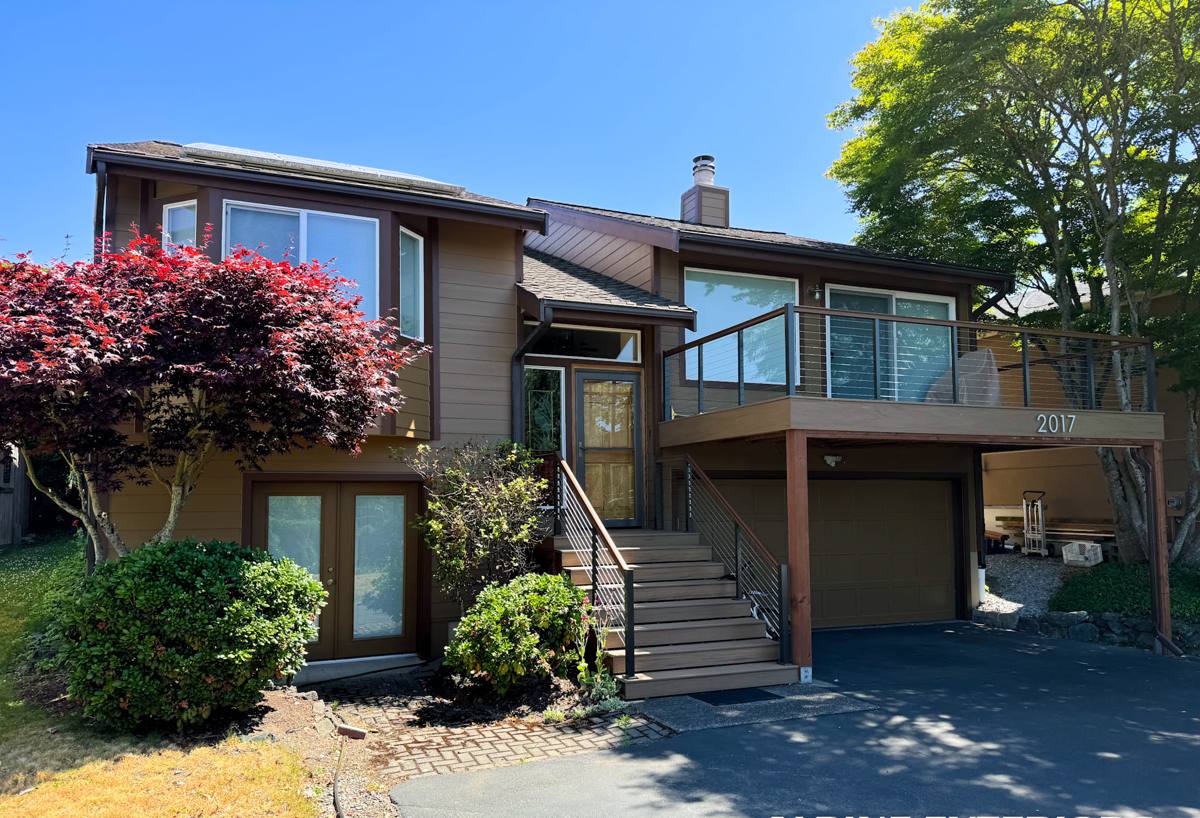
What Nooksack's Climate Actually Does to Siding
Three things drive almost every siding problem we see out this way:
- Driving rain: Whatcom County storms often come in sideways off the water, pushing moisture up under laps, around trim, and into any gap that wasn't sealed or flashed correctly.
- Long moss season: Shaded north and east walls, tree cover, and consistently damp air let moss and algae establish on siding surfaces that don't dry out quickly between rain events.
- Marine-influenced humidity: Even on days without rain, the air carries enough moisture to keep porous or poorly sealed siding materials perpetually damp at the surface — the condition that feeds rot, delamination, and coating failure.
None of this is unusual for western Washington. What matters is whether the siding product and the installation crew are actually built to handle it, or whether the wall system is just tolerating it until something gives.
Why Local Installation Experience Matters
A siding crew that mostly works drier climates tends to install to a generic standard — caulk instead of proper flashing, tight-to-the-ground clearances, fastener patterns that don't account for expansion in a wetter environment. In Nooksack and the rest of the Lynden area, those shortcuts show up faster than they would somewhere drier, because the wall assembly never gets a real chance to dry out between storms.
A crew that works this area regularly builds habits around it: flashing every horizontal transition instead of relying on sealant, keeping ground clearance where lawns and landscaping crowd the foundation, and detailing window and door openings so water sheds away from the sheathing instead of pooling behind the cladding. That's not a special "upgrade" — it's what correct installation looks like when you're honest about the climate you're building in.
What Correct Installation Actually Involves
Good siding installation is mostly invisible once the job is done — it's the water management underneath that does the work. A properly installed system includes:
- Full tear-off and inspection of the sheathing for existing rot or moisture damage before anything new goes up
- A continuous weather-resistive barrier, lapped correctly with no gaps at seams or penetrations
- Flashing at every window, door, deck ledger, and horizontal trim transition — not caulk used as a substitute
- Correct fastener type, spacing, and depth for the specific siding product, per manufacturer specification
- Proper clearance from grade, roof lines, and hardscape so the bottom edge of the siding can dry
- Rain-screen or drainage gap detailing where the product and wall assembly call for it
Skip any one of these and the siding may look fine for a year or two before problems start showing at seams, corners, and low points — exactly the places that are hardest and most expensive to fix after the fact.
Why We Install Only James Hardie Fiber Cement
We install exclusively James Hardie fiber cement siding — we don't install vinyl, LP SmartSide, or other fiber cement brands. That's a deliberate standard, not a sales preference, and it comes directly from what holds up in this climate.
Fiber cement is dimensionally stable and non-combustible, and it doesn't absorb and swell with moisture the way wood-based composite products can. James Hardie's HZ5 product line is engineered specifically for climates like ours — freeze-thaw cycling, sustained damp weather, and moss and mildew exposure — rather than a one-size-fits-all national spec. The ColorPlus factory finish is baked on under controlled conditions, which gives it far more consistent coverage and UV resistance than field-applied paint, and it holds up better against the kind of grime and algae growth that shaded, damp walls in this area tend to collect.
Vinyl siding can flex, warp in heat, and rarely stays looking new after a decade of Pacific Northwest weather cycling. Wood-based composite sidings, even good ones, depend heavily on perfect installation and maintenance to keep moisture from finding the substrate — and in a valley that stays damp this long, that margin for error is thin. Fiber cement gives us a product we can install once, flash correctly, and stand behind without asking the homeowner to gamble on maintenance discipline for the next twenty years.
Our Installation Process
- On-site assessment: We inspect the existing siding, sheathing, and trim to identify moisture damage, rot, or drainage issues before quoting the job.
- Tear-off and sheathing repair: Old siding comes off, damaged sheathing is replaced, and the wall is prepped for a new weather-resistive barrier.
- Barrier and flashing: We install a continuous drainage plane and flash every penetration, transition, and opening before any siding goes up.
- Hardie installation to spec: Siding is installed following James Hardie's fastening and clearance requirements for our climate zone, not a generic national default.
- Trim, caulking, and final detail: Trim is set, joints are sealed appropriately, and clearances are checked at grade, roofline, and all penetrations.
- Walkthrough: We go over the finished work with the homeowner, including what routine maintenance (if any) the product actually needs.
Material Comparison for Nooksack Conditions
| Factor | James Hardie Fiber Cement | Vinyl | Wood-Based Composite |
|---|---|---|---|
| Moisture resistance | High — cement-based, doesn't swell or rot | High, but seams and warping create leak paths over time | Moderate — depends on edge sealing and maintenance |
| Performance in sustained damp weather | Engineered HZ5 line for this climate zone | Can warp or become brittle with temperature cycling | Vulnerable at cut edges and joints if maintenance lapses |
| Moss/algae resistance on shaded walls | Factory finish resists staining and growth | Can stain; harder to clean without damage | More porous surface, more prone to growth |
| Fire rating | Non-combustible | Combustible | Combustible |
| Finish longevity | Factory-applied ColorPlus, long warranty | Color molded in but fades and chalks over time | Typically field-painted; repaint cycle required |
Cost Considerations for a Nooksack Siding Job
Every home is different, but the price of a siding installation in this area is driven by a consistent set of factors:
| Cost Factor | Why It Matters Here |
|---|---|
| Extent of sheathing repair | Long-term moisture exposure sometimes means hidden rot isn't visible until tear-off |
| Home size and wall complexity | More corners, dormers, and transitions mean more flashing detail and labor |
| Siding profile and trim package | Lap width, trim style, and accent details affect material and labor cost |
| Access and site conditions | Landscaping, slope, and setback affect scaffolding and staging |
| Existing drainage plane condition | Whether the weather barrier can be reused or needs full replacement |
We give homeowners a firm number after an on-site assessment — not a guess based on square footage alone, since the condition behind the old siding matters as much as the siding itself.
Signs a Nooksack-Area Home May Need New Siding
- Persistent moss, algae, or dark staining that returns shortly after cleaning
- Soft spots, bubbling, or visible warping in the siding surface
- Cracked or missing caulk at seams, corners, and trim joints
- Paint that's peeling or blistering, especially on north- or east-facing walls
- Visible gaps or separation at butt joints and corner boards
- Musty smell or discoloration on interior walls that share an exterior wall with problem siding
Any one of these on its own isn't necessarily an emergency, but in a climate that stays damp as long as ours does, problems tend to compound quietly behind the siding before they show up as a full replacement.
Get a Free, No-Pressure Estimate
If you're weighing a siding replacement for a home in the Nooksack or greater Lynden area, we're happy to take a look and give you a straight answer — what shape the current siding and sheathing are in, what a proper James Hardie installation would involve, and a real cost range based on your home. Use the form below to request a free estimate.