 Lynden Siding
 Siding Built for Sumas' Weather, Not Just Its Looks
Sumas sits hard against the Canadian border in the northeast corner of Whatcom County, close enough to the Fraser Valley that its weather behaves a little differently than the rest of Lynden's service area. Homes here take on driving rain funneled through the valley, damp air that lingers into the afternoon, and a moss season that can stretch from October well into spring. Add in the salt-tinged air that moves inland off the Salish Sea on prevailing winds, and you get a combination that punishes the wrong siding material fast. We install James Hardie fiber cement exclusively, and on Sumas homes specifically, that choice comes down to how the product handles sustained moisture exposure without swelling, delaminating, or feeding the moss and algae growth that thrives in this climate.
This page focuses on one job: James Hardie siding replacement for homes in and around Sumas. Not a general overview of siding options, not a company history — just what local homes need, what a correct installation looks like, and why the crew doing the work matters as much as the product itself.
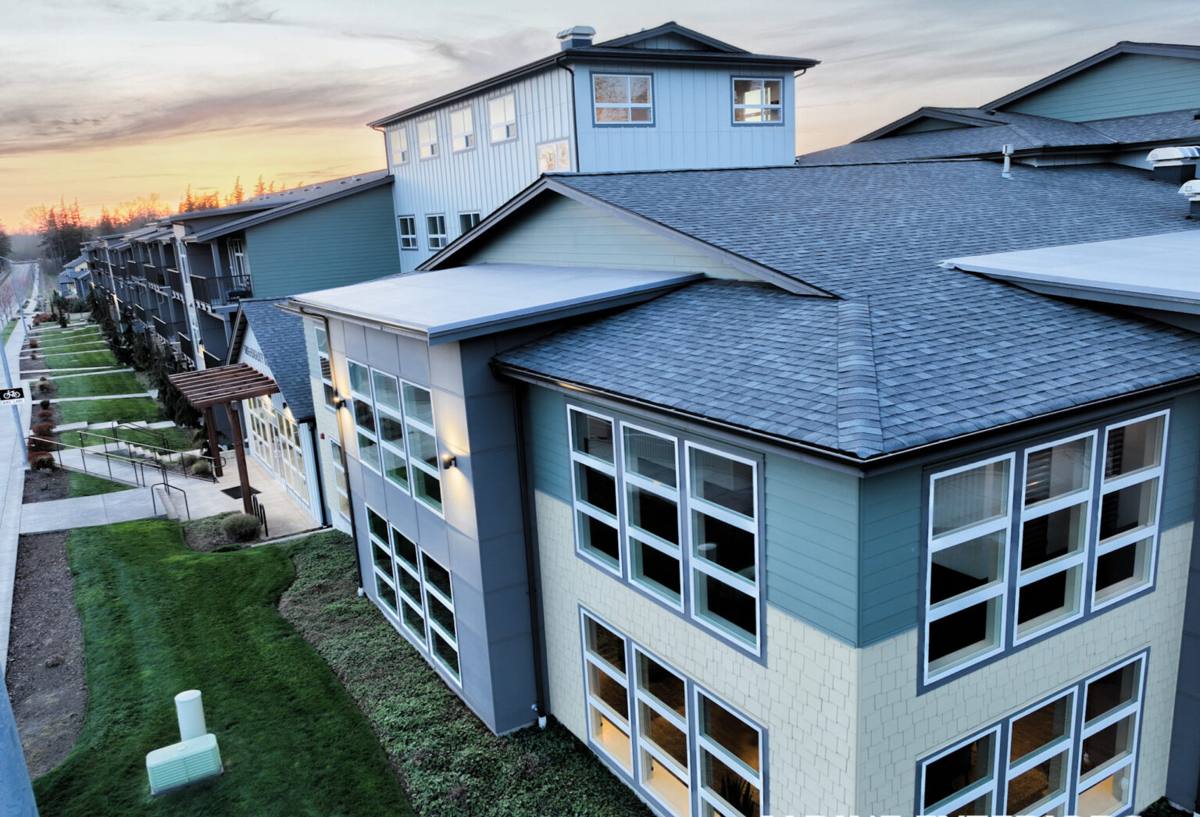
What Sumas' Climate Actually Does to Siding
Driving Rain and Wind-Driven Moisture
Sumas' proximity to the Fraser Valley means storms often arrive with more horizontal push than homes farther south or west experience. Driving rain doesn't just wet a wall surface — it forces water up under laps, into fastener holes, and behind trim if the water-resistive barrier and flashing details aren't done right. Fiber cement itself is dimensionally stable and won't absorb water the way wood-based products can, but the installation is what actually keeps water out. A product rated for wet climates installed with sloppy flashing will still fail.
Salt Air and Corrosion
While Sumas isn't coastal, weather systems moving through Whatcom County carry salt-laden air off the Salish Sea, and it settles on exterior surfaces over time. Salt exposure accelerates corrosion on unprotected fasteners and trim hardware. This is one of the quieter reasons installation quality matters more than people expect — stainless or hot-dip galvanized fasteners rated for the exposure, not whatever was in the nail gun.
The Long Moss Season
Whatcom County's moss and algae season is long, and Sumas' shaded lots and persistent dampness make it worse. Moss doesn't just look bad — it holds moisture against a wall surface, and on materials that absorb water, that trapped moisture leads to rot and paint failure over years. James Hardie's factory ColorPlus finish is baked on and resists the kind of moisture penetration that lets algae get a foothold and stain the surface the way field-applied paint often does over time.
Why We Standardized on James Hardie for This Climate
We don't install LP SmartSide, vinyl, Cemplank, Allura, primed spruce, or cedar. That's not a marketing position — it's a standard we set after weighing what actually holds up in Whatcom County's wet, mossy, wind-driven conditions against what's easiest or cheapest to install. Wood-based siding products, even engineered ones, rely on edge sealing and field maintenance to keep moisture out; in a climate where the siding rarely gets a long dry stretch to fully release moisture, that maintenance margin gets thin. Vinyl expands and contracts with temperature swings and can warp or crack under sustained cold snaps, and it doesn't hold paint if a homeowner ever wants to change the color. Cedar is a beautiful material, but it demands ongoing staining or sealing to resist the rot and moss growth this climate practically guarantees if left untreated.
James Hardie fiber cement is non-combustible, doesn't expand and contract the way vinyl does, and its ColorPlus finish is engineered and warrantied specifically against the fading and moisture issues that field-painted products struggle with here. Whatcom County isn't a wildfire-prone area the way parts of the state are, but non-combustibility is still a real, permanent property advantage that costs nothing extra to have. For a climate that gives siding almost no break from moisture for half the year, we think Hardie is the product that actually earns its keep over a 30-plus year service life.
James Hardie Product Lines Relevant to Sumas Homes
| Product | Best Use | Why It Fits Sumas |
|---|---|---|
| HardiePlank Lap Siding, HZ10 climate zone | Primary wall siding | Engineered for cold, wet Pacific Northwest exposure |
| HardiePanel Vertical Siding | Accent walls, gables | Reduces horizontal laps where wind-driven rain intrusion risk is highest |
| HardieTrim boards | Corners, window and door trim | Resists the moisture wicking that rots wood trim in shaded, damp areas |
| HardieSoffit panels | Eaves and overhangs | Non-combustible, moisture-resistant ventilation-ready soffit |
What a Correct James Hardie Job Actually Involves
The siding material is only part of the equation. Most siding failures we get called out to inspect — regardless of brand — trace back to installation shortcuts, not the product itself. On a Sumas home, a correct job means:
- A properly lapped and sealed water-resistive barrier behind the siding, with all seams taped
- Correct flashing at every window, door, and roof-to-wall intersection — the details that matter most in driving rain
- Fasteners rated for the exposure and driven to Hardie's specified depth, not overdriven or underdriven
- Proper clearance between siding and grade, decks, and roof lines to avoid wicking moisture from standing water or splashback
- Correct lap and gap spacing per Hardie's installation manual, accounting for seasonal expansion
- Caulking and joint treatment only where Hardie's spec calls for it — over-caulking traps moisture instead of shedding it
Every one of these steps is invisible once the job is done and the siding looks good from the curb. That's exactly why they get skipped by crews working fast and cheap, and exactly why they matter most in a climate like Sumas'.
Our Process on a Sumas Siding Replacement
1. On-Site Assessment
We walk the exterior with the homeowner, check for existing moisture damage, rot, or failed flashing behind the current siding, and look at drainage, grading, and roof-to-wall details specific to the property.
2. Tear-Off and Inspection
Once old siding comes off, we inspect the sheathing and framing underneath. This is where hidden moisture damage from years of a compromised water barrier often shows up, and it needs to be addressed before anything new goes on the wall.
3. Water-Resistive Barrier and Flashing
This step is the actual line of defense against Sumas' driving rain. We install and tape the barrier correctly and flash every penetration before a single piece of siding goes up.
4. James Hardie Installation to Manufacturer Spec
Siding, trim, and soffit are installed following Hardie's fastening, lap, and clearance requirements for the HZ10 climate zone, not generic best guesses.
5. Final Walkthrough
We review the finished job with the homeowner, including how to spot early signs of moss buildup or maintenance needs going forward.
Why Hiring a Crew That Already Works Sumas Matters
A crew that's worked other Sumas and greater Lynden properties already knows what this specific stretch of Whatcom County throws at a wall — the wind direction storms tend to come from, how shaded lots hold moisture longer, and where moss tends to establish first on a north-facing wall. That's not something a crew from outside the region picks up on a single job. It also means faster, more accurate estimates, because we're not guessing at local permitting norms or typical wall assemblies in the area — we've already seen them.
There's also a practical service argument: a local crew is easier to reach for warranty follow-up or a maintenance question five or ten years down the line. James Hardie's warranty is transferable and backed by the manufacturer, but the installation workmanship is what most contractors stand behind separately — and that's worth something when the company that installed it is still working in your neighborhood.
Cost Factors for a Sumas James Hardie Project
| Factor | Why It Affects Cost |
|---|---|
| Extent of tear-off and existing damage | Rot or moisture damage found under old siding adds repair scope before new siding can go on |
| Home size and wall complexity | More corners, gables, and trim details mean more labor and material |
| Product line and profile chosen | Lap siding, panel siding, and trim combinations vary in material cost |
| ColorPlus finish vs. field-painted option | Factory finish carries a different cost structure than site-applied paint over primed board |
| Access and site conditions | Sloped lots, mature landscaping, or tight setbacks can affect labor time |
We give exact numbers only after seeing the specific home — anything else is a guess, and guesses aren't useful to a homeowner trying to budget.
Signs a Sumas Home May Need Siding Attention Now
- Persistent moss or algae staining that keeps returning after cleaning
- Soft or spongy spots when pressing on siding near the ground or under windows
- Visible gaps, warping, or separation at seams and corners
- Paint that's peeling or bubbling rather than fading evenly
- Rising energy bills that may point to compromised wall insulation behind failing siding
If a home shows two or more of these signs, it's worth having someone look at what's happening behind the siding, not just the surface.
If you're weighing a siding replacement on a Sumas-area home, we're happy to take a look and walk you through what your specific property needs — no pressure, no obligation. Use the form below to request a free estimate.